Introduction
The global demand for herbal, cosmetic, and personal care products is growing rapidly as consumers increasingly prefer natural, wellness-focused, and sustainable products. However, bringing these products to market requires more than innovative formulations and attractive packaging — it requires strict compliance with evolving regulatory requirements across different countries.
Each region follows its own framework for:
- Product classification
- Ingredient safety evaluation
- Labelling and claims compliance
- Manufacturing standards
- Registration and notification procedures
Failure to meet these requirements can lead to:
- Product rejection
- Import delays
- Regulatory warnings
- Market withdrawal
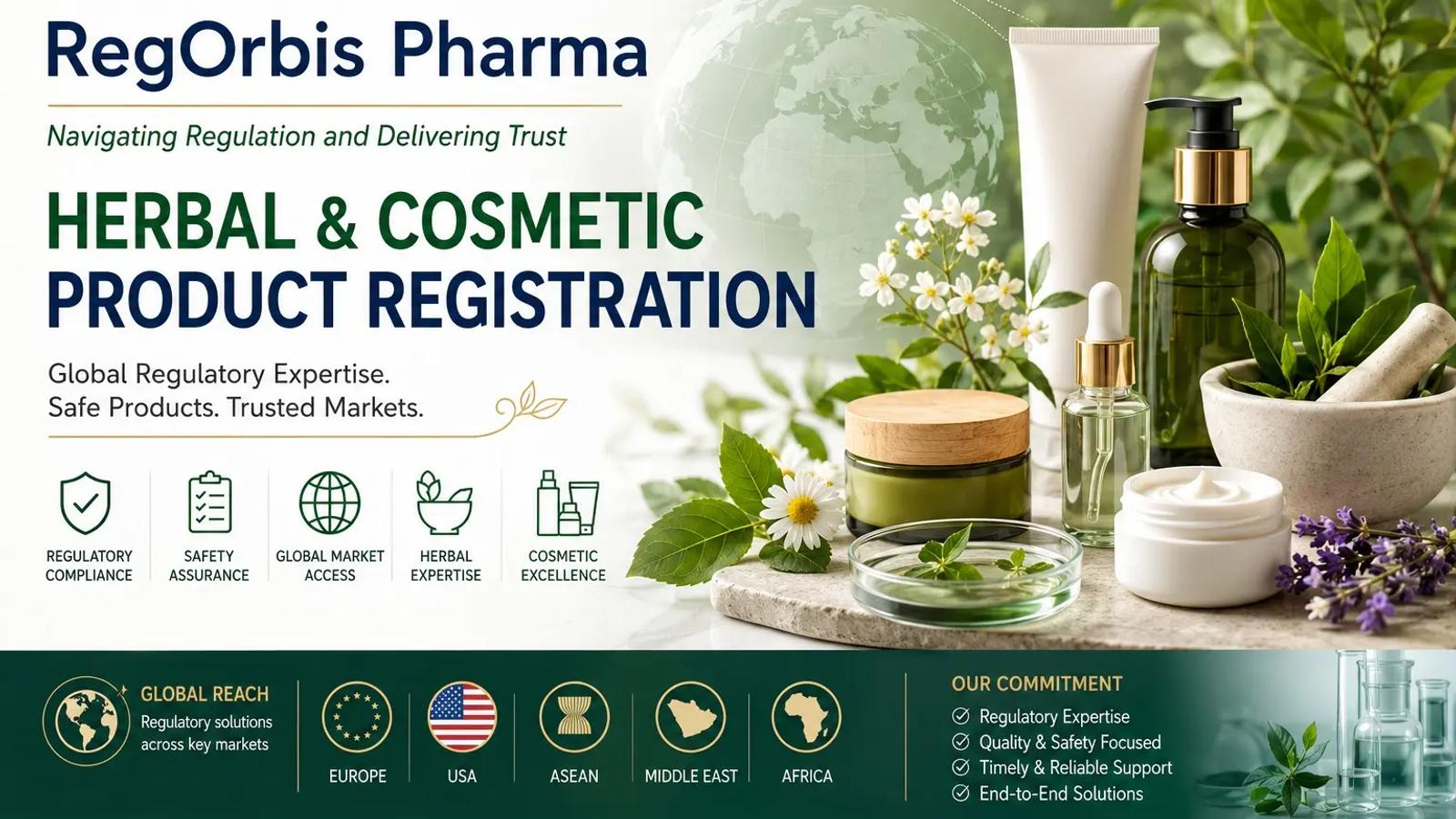
At RegOrbis Pharma, we help organizations navigate complex regulatory pathways and achieve compliant product registrations across global markets.
Understanding Herbal & Cosmetic Product Registration
What is Herbal Product Registration?
Herbal products are generally regulated based on:
- Intended use
- Product claims
- Composition
- Traditional medicine classification
Depending on the country, herbal products may be regulated as:
- Herbal medicines
- Traditional medicines
- Nutraceuticals
- Dietary supplements
- Ayurvedic products
What is Cosmetic Product Registration?
Cosmetic products are intended to:
- Cleanse
- Beautify
- Protect
- Improve appearance
Examples include:
- Skin care products
- Hair care products
- Makeup products
- Perfumes and deodorants
Most countries require compliance with:
- Cosmetic ingredient restrictions
- Product safety assessments
- Labelling regulations
- GMP requirements
Why Regulatory Compliance is Important
Regulatory authorities assess products to ensure:
- Consumer safety
- Ingredient compliance
- Product quality
- Accurate claims and labelling
Improper registration or unsupported claims may result in:
- Product recalls
- Customs detention
- Financial penalties
- Brand reputation damage
Key Documentation Requirements
Herbal Products
Typical requirements include:
- Product composition
- Manufacturing process
- Raw material specifications
- Stability data
- Safety assessment
- Traditional use evidence (if applicable)
Cosmetic Products
Typical requirements:
- Ingredient list
- Safety assessment
- Product Information File
- Labelling & artwork
- Microbial testing
- Stability & compatibility data
Importance of Safety Assessment
Safety evaluation is a critical component for both herbal and cosmetic products.
Authorities assess:
- Toxicological profile
- Ingredient concentration limits
- Heavy metals / impurities
- Microbial quality
- Preservative effectiveness
Labelling & Claims Compliance
One of the most common reasons for regulatory rejection is:
Non-compliant labelling or misleading claims
Common Issues:
- Unsupported “medical” claims
- Missing mandatory warnings
- Incorrect ingredient declaration
- Improper translations
Common Challenges in Herbal & Cosmetic Registration
- Product Classification Issues - Different countries classify products differently.
- Ingredient Restrictions - Certain ingredients may be: Restricted, Prohibited ,Concentration-limited
- Labelling Non-Compliance - Country-specific requirements vary significantly.
- Safety Documentation Gaps - Incomplete safety assessments delay approvals.
- Regulatory Changes - Global cosmetic and herbal regulations evolve continuously.
Registration Process (General Flow)
- Product classification assessment
- Regulatory strategy development
- Ingredient & claims review
- Safety assessment preparation
- Dossier/document compilation
- Labelling compliance review
- Product notification/registration
- Authority review & approval
Future Trends in Herbal & Cosmetic Regulations
- Increased focus on clean-label products
- Stronger ingredient safety regulations
- Sustainability & environmental compliance
- Digital product traceability
- AI-driven regulatory monitoring
How RegOrbis Pharma Supports You
At RegOrbis Pharma, we provide comprehensive support for:
- Herbal product registration
- Cosmetic product notification & compliance
- Ingredient & claims review
- Labelling and artwork compliance
- Global market entry strategy
- Lifecycle and post-approval support
Our goal is to ensure your products are - safe, compliant, and market-ready across global regions
Conclusion
The herbal and cosmetic industry offers tremendous global opportunities, but successful market entry requires strong regulatory planning and compliance management.
By understanding:
- Product classification
- Regional registration requirements
- Labelling regulations
- Safety expectations
Companies can:
- Accelerate approvals
- Avoid regulatory risks
- Build consumer trust
At RegOrbis Pharma, we help organizations navigate global herbal and cosmetic regulations with confidence — delivering compliant, efficient, and trusted registration solutions for international market success.
If you need expert support for registration of Herbal and Cosmetics, our regulatory experts are ready to assist.
📧 Email: Info@regorbispharma.com
📱 Phone: +91 9967265308 / 9668430491
🌐 Website: www.regorbispharma.com